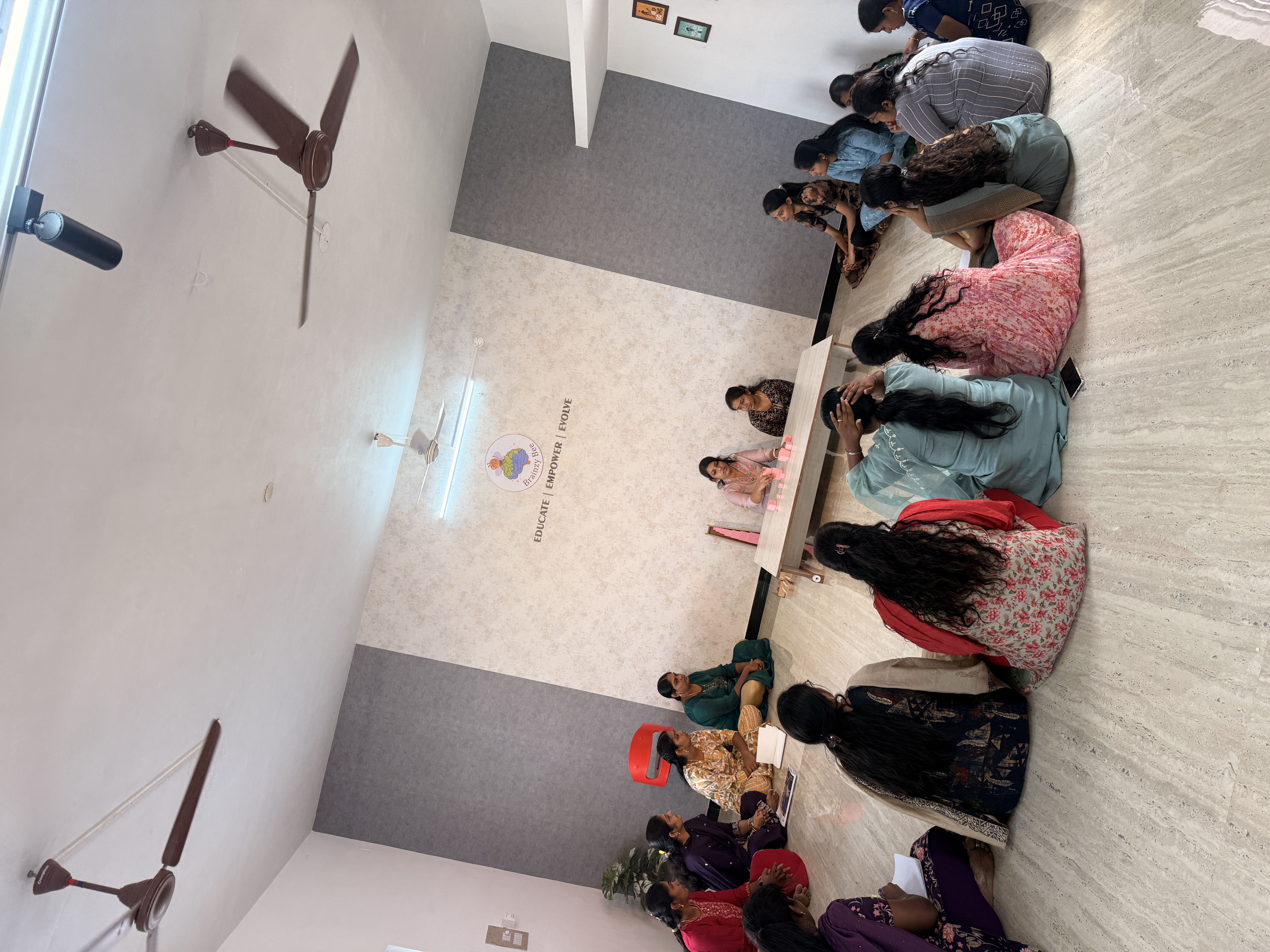
At BrainzyBee, we believe that observation is one of the most powerful tools a Montessori educator can possess. Maria Montessori emphasized that before teaching a child, we must first understand the child. Observation allows teachers to discover a child’s interests, developmental needs, learning patterns, and readiness for new experiences.
Why is Observation Important?
Observation is the foundation of Montessori education. Instead of directing children constantly, Montessori teachers carefully watch and understand each child’s unique journey. Through observation, teachers can:
• Identify a child’s interests and strengths.
• Understand developmental needs.
• Recognize sensitive periods for learning.
• Assess readiness for new materials.
• Support independence and self-directed learning.
Observation helps teachers make informed decisions rather than assumptions about a child’s learning.
What Does “Following the Child” Mean?
Following the child does not mean allowing children to do whatever they want. It means respecting their natural development and providing opportunities that match their interests and readiness.
An authentic Montessori teacher:
• Observes before intervening.
• Respects the child’s pace of learning.
• Provides appropriate guidance when needed.
• Encourages independence and confidence.
• Creates an environment that supports exploration and discovery.
When teachers follow the child, learning becomes meaningful, joyful, and lasting.
How to Observe a Child Effectively
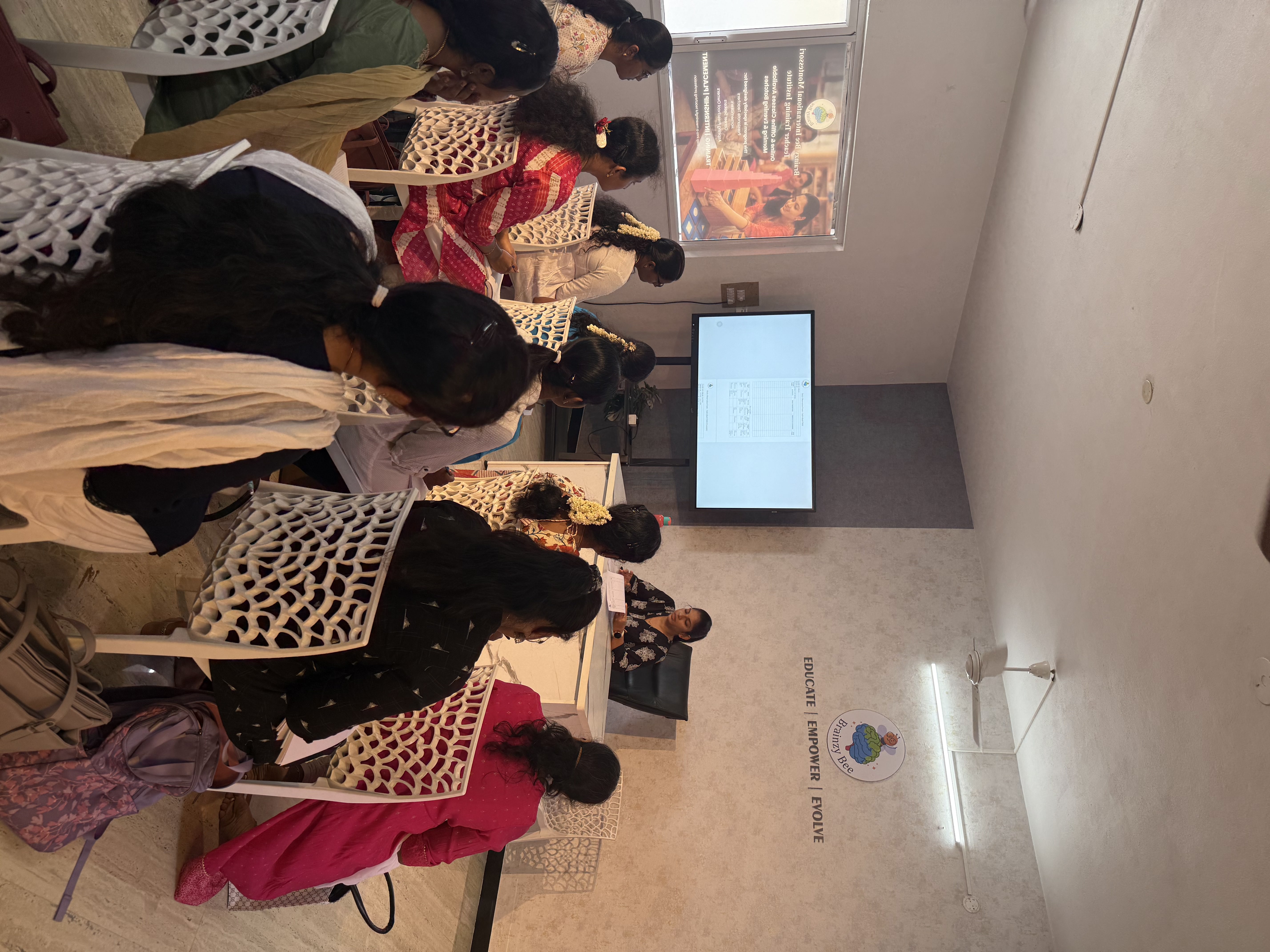
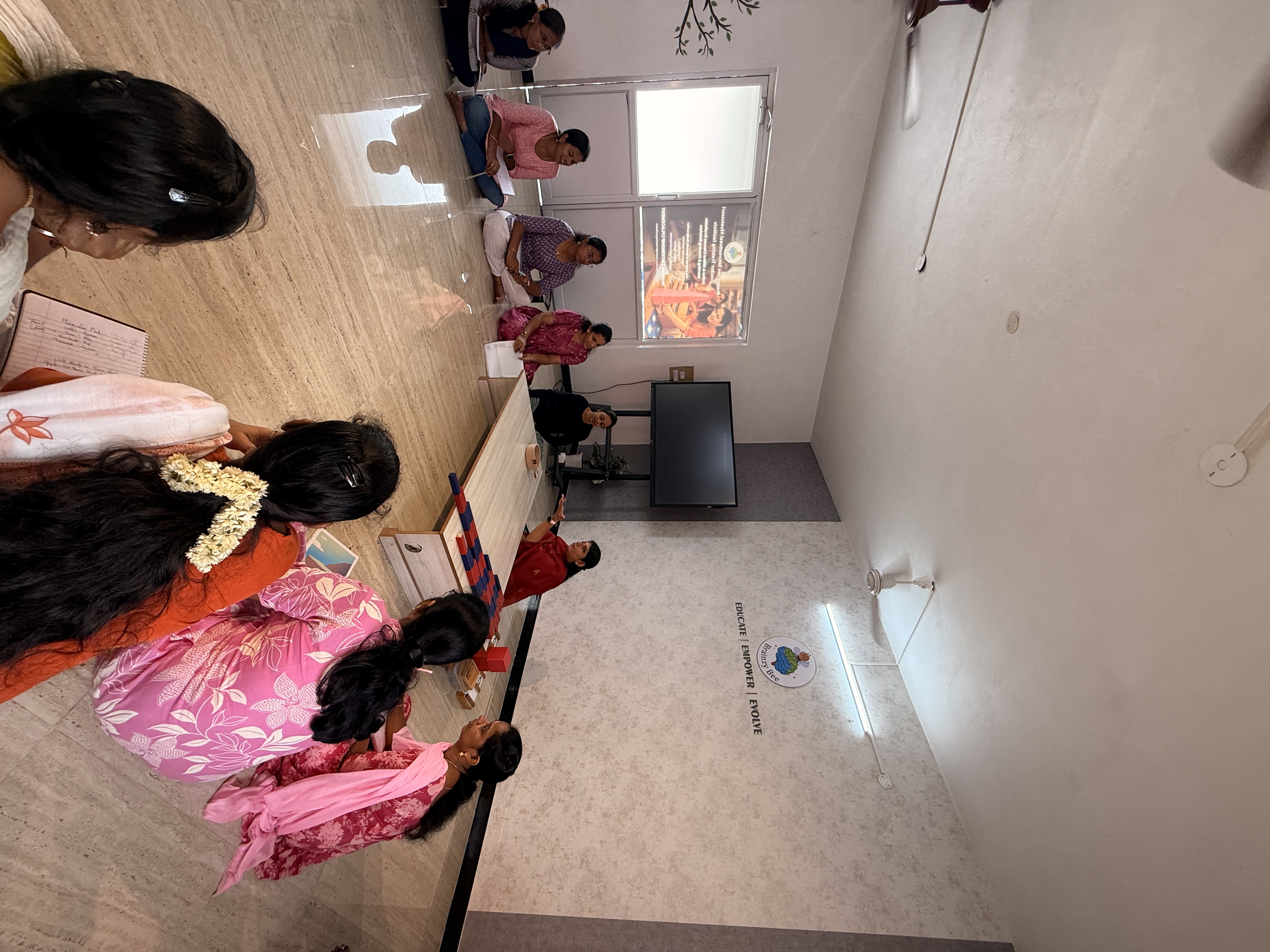
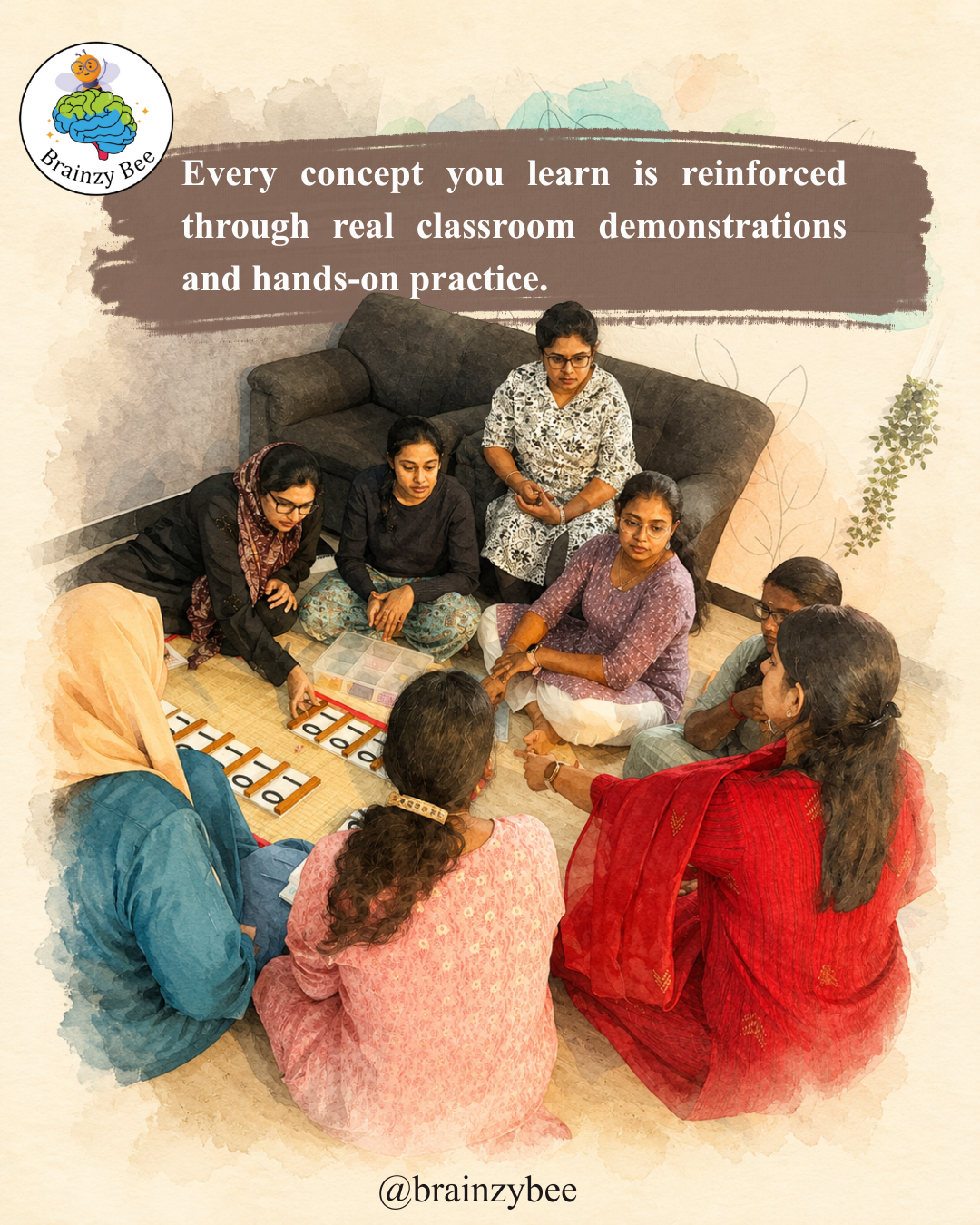
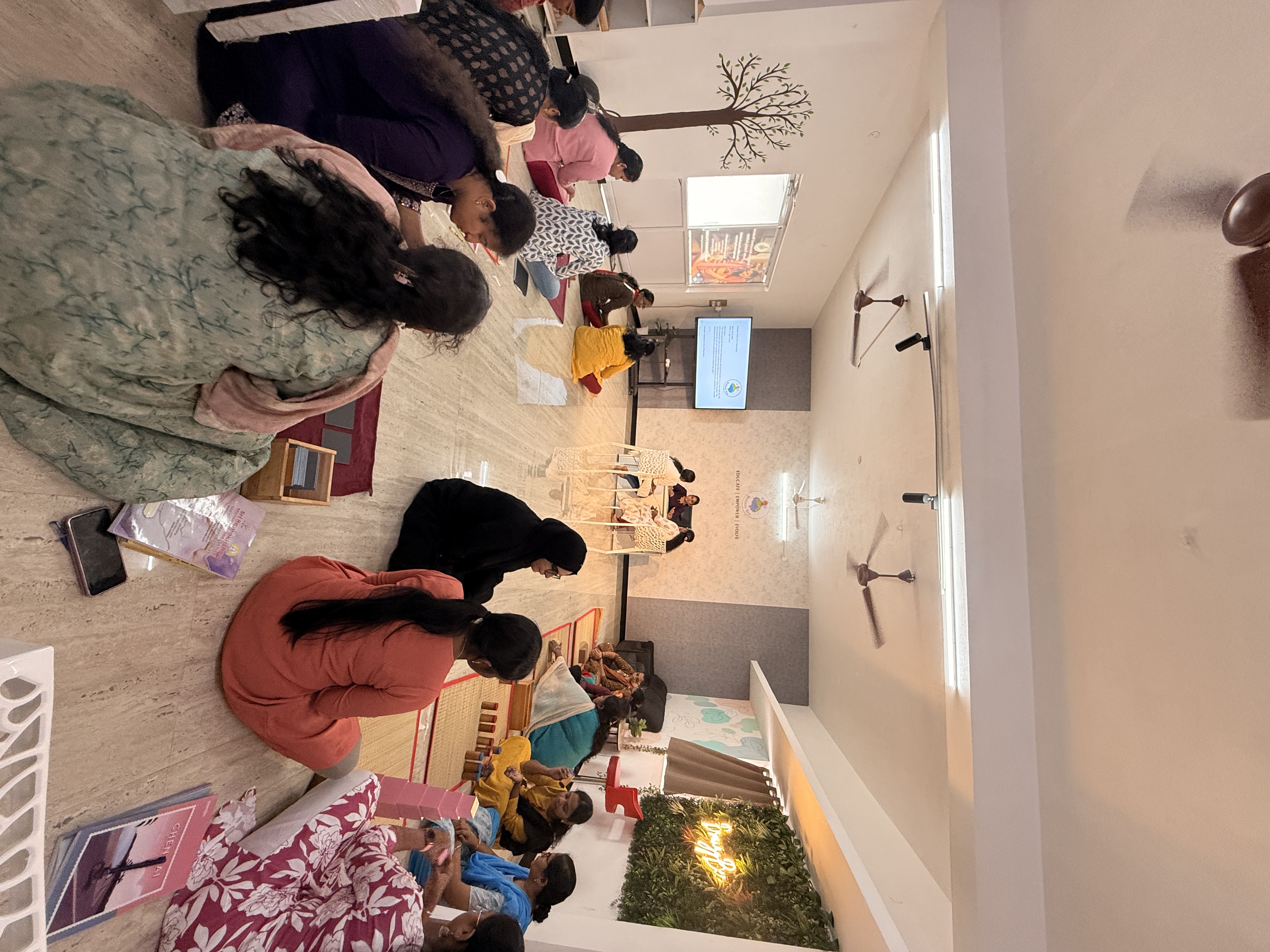
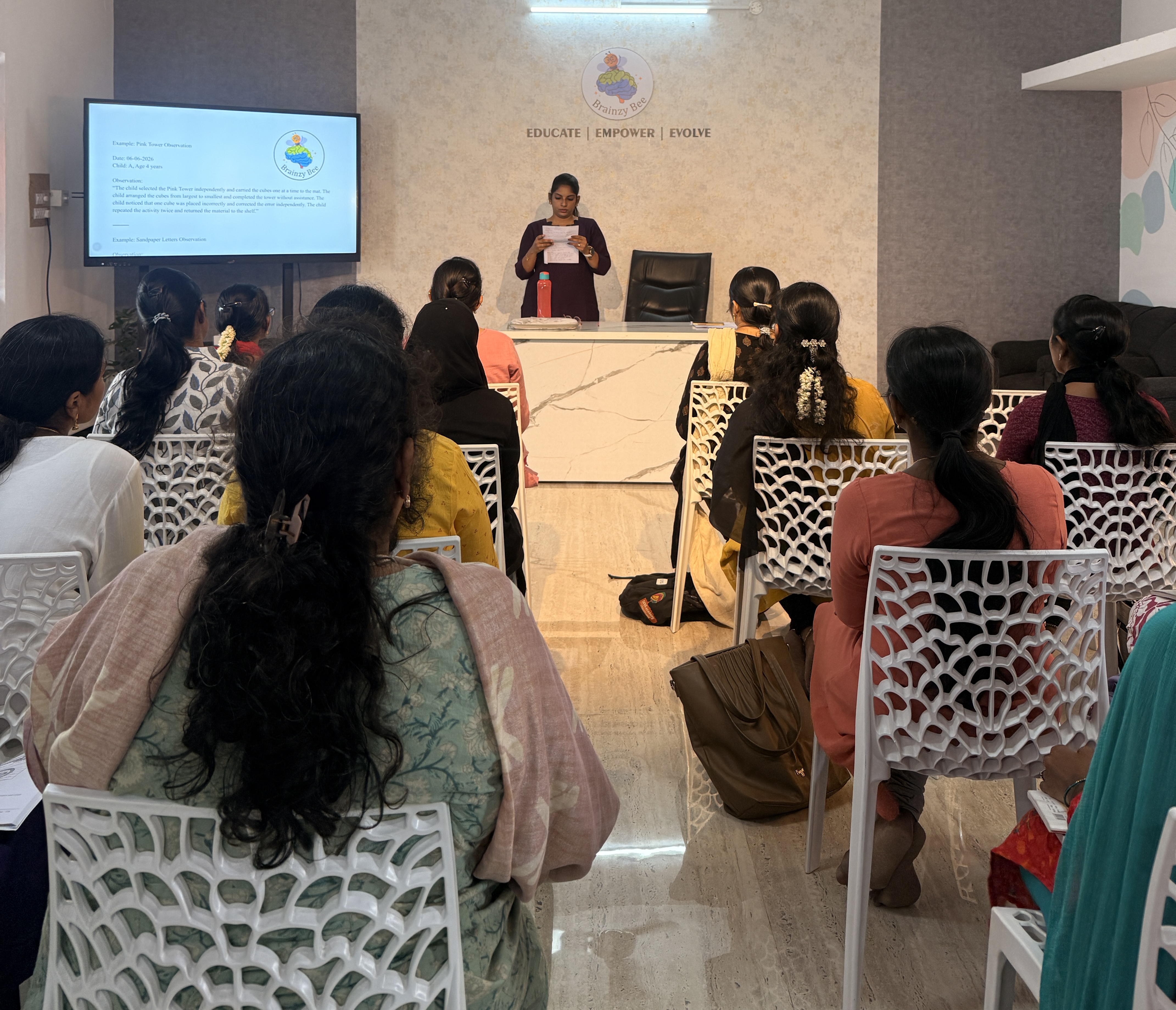
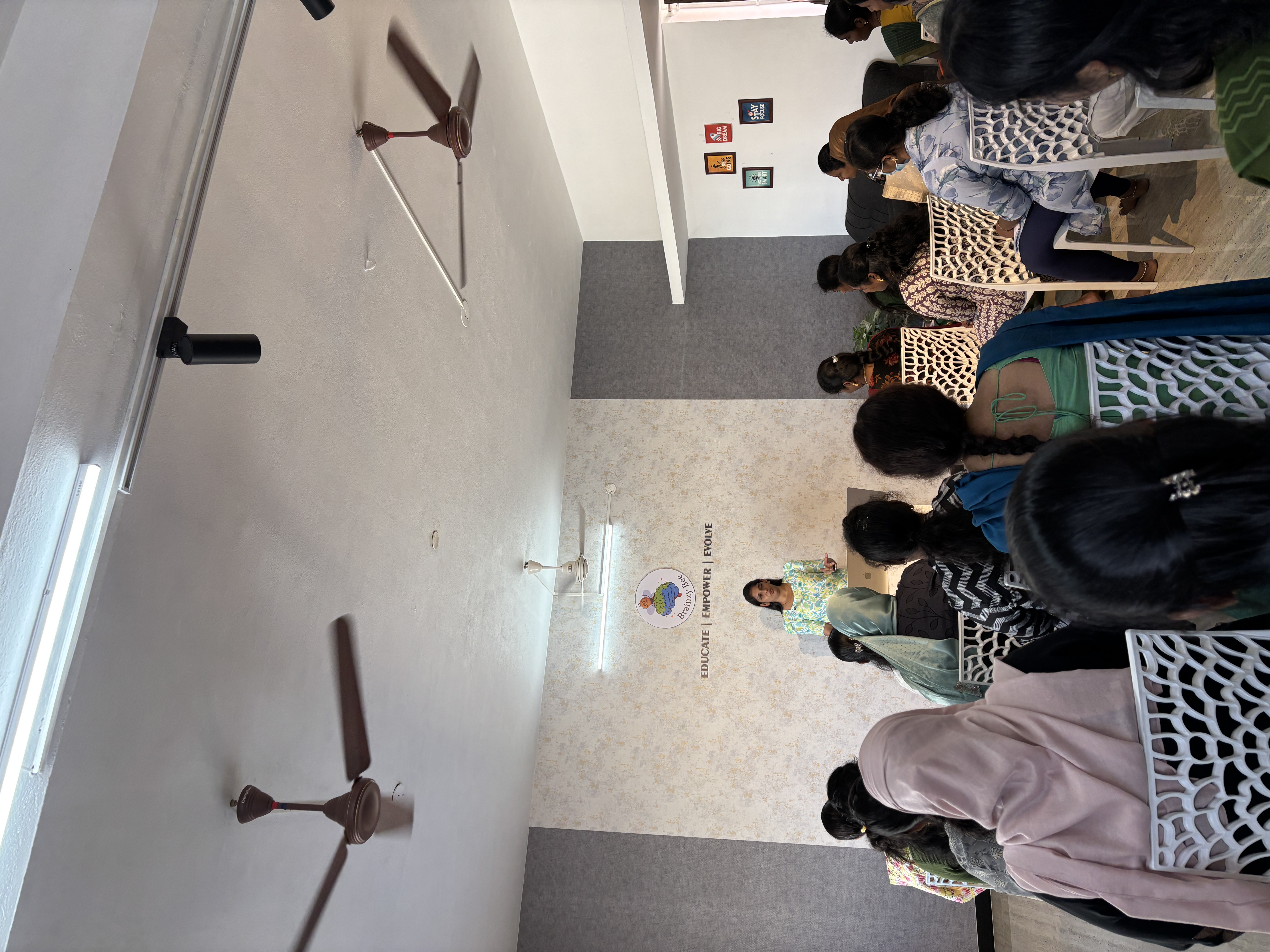
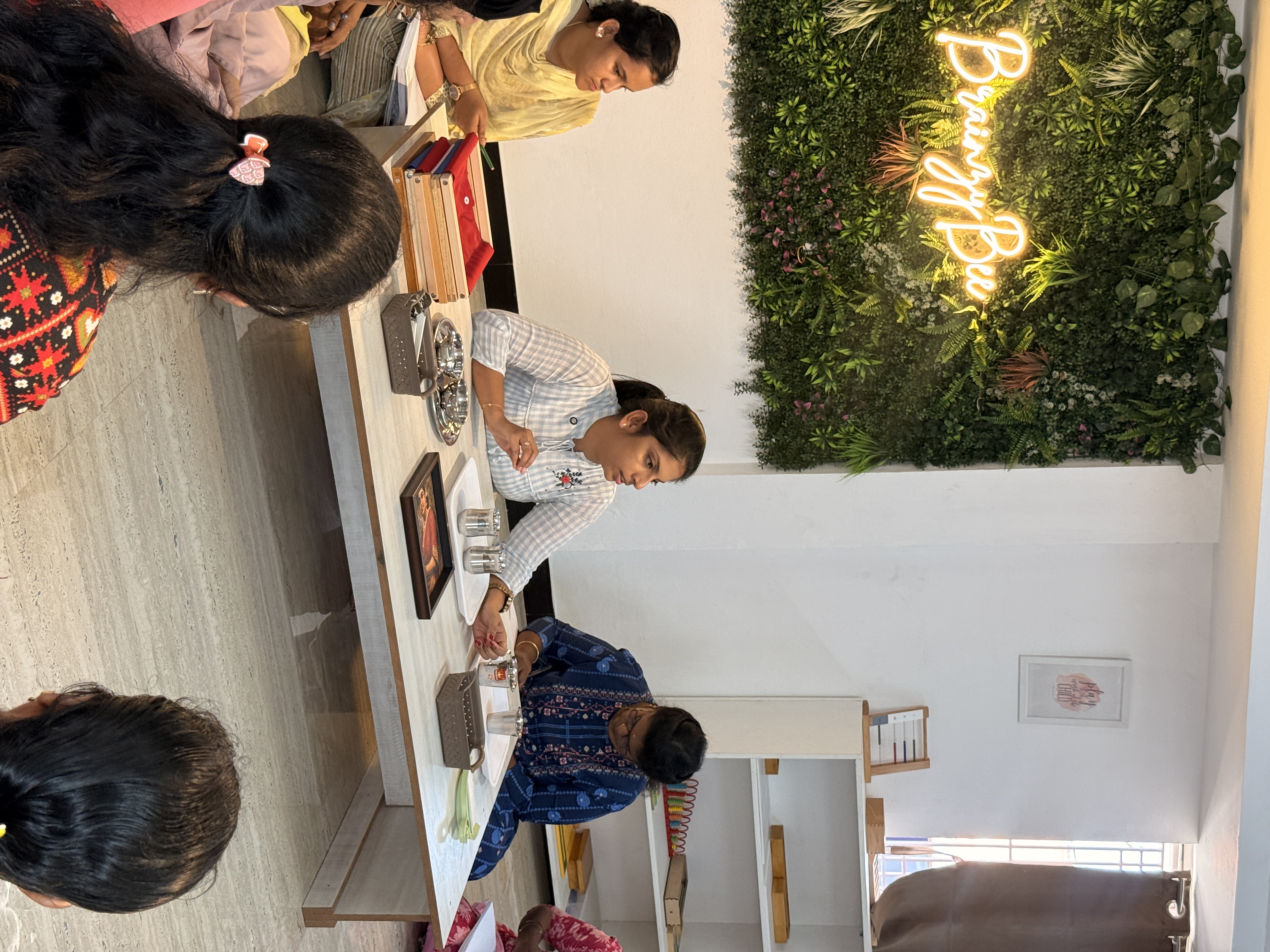
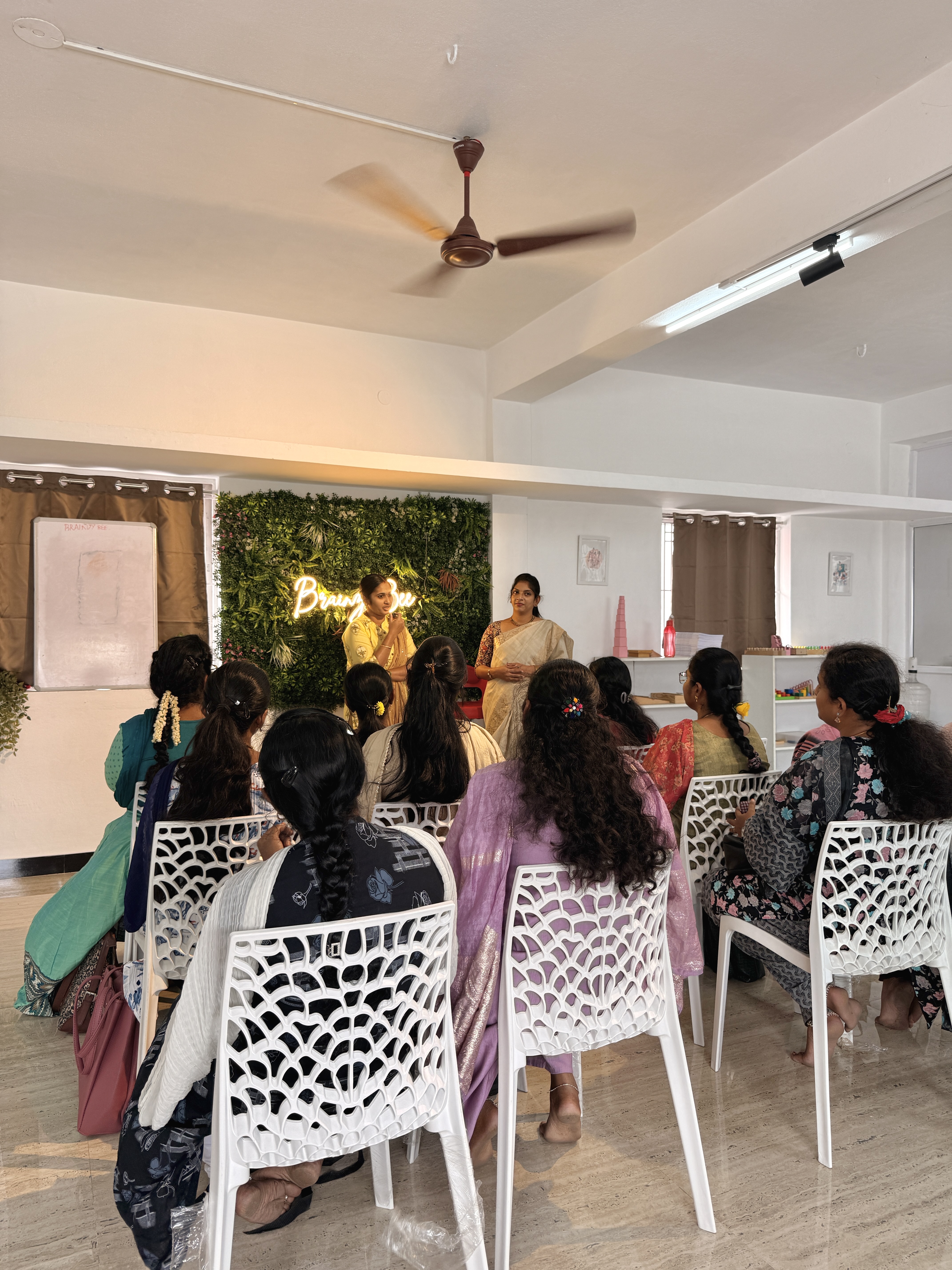
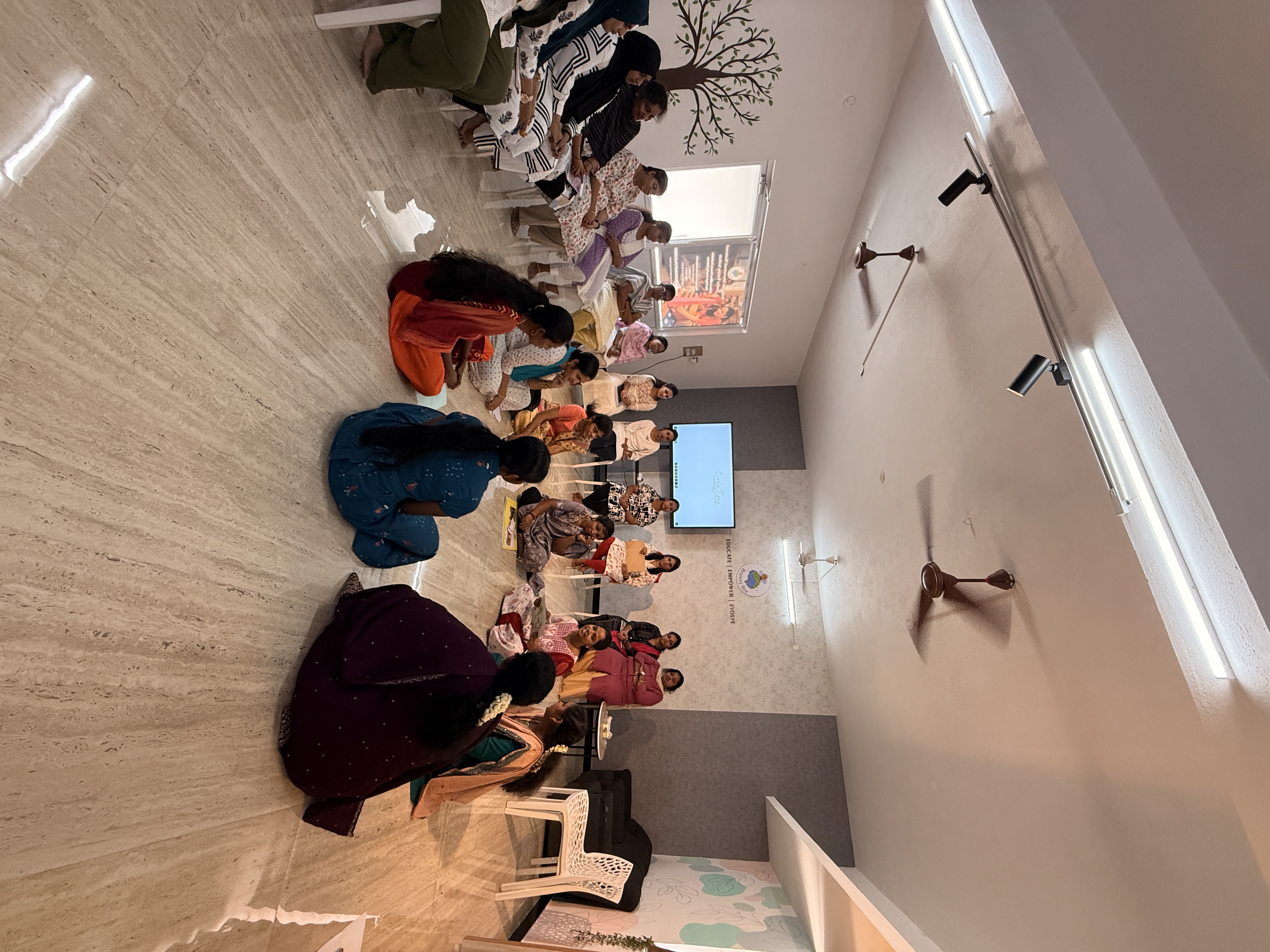
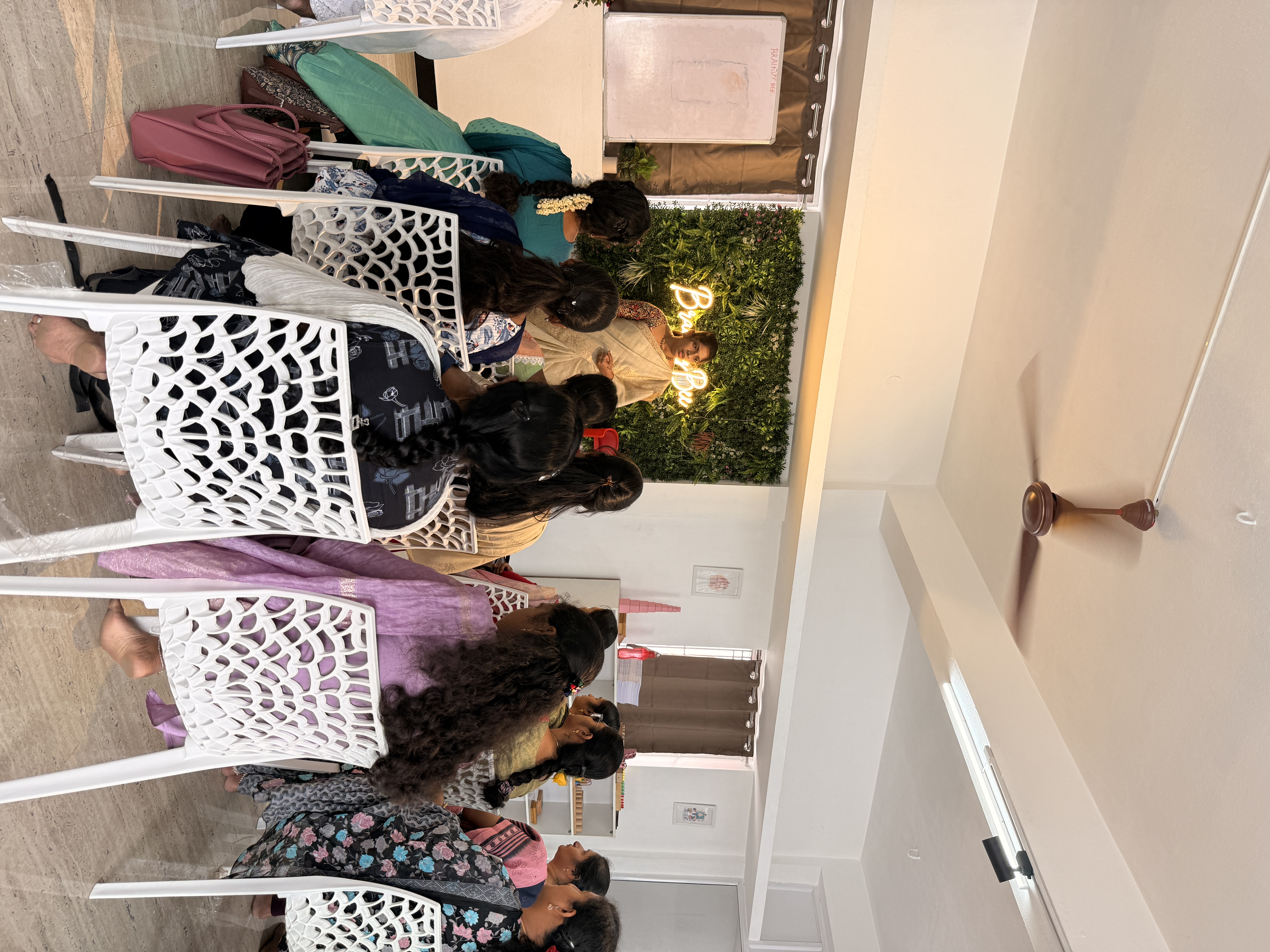
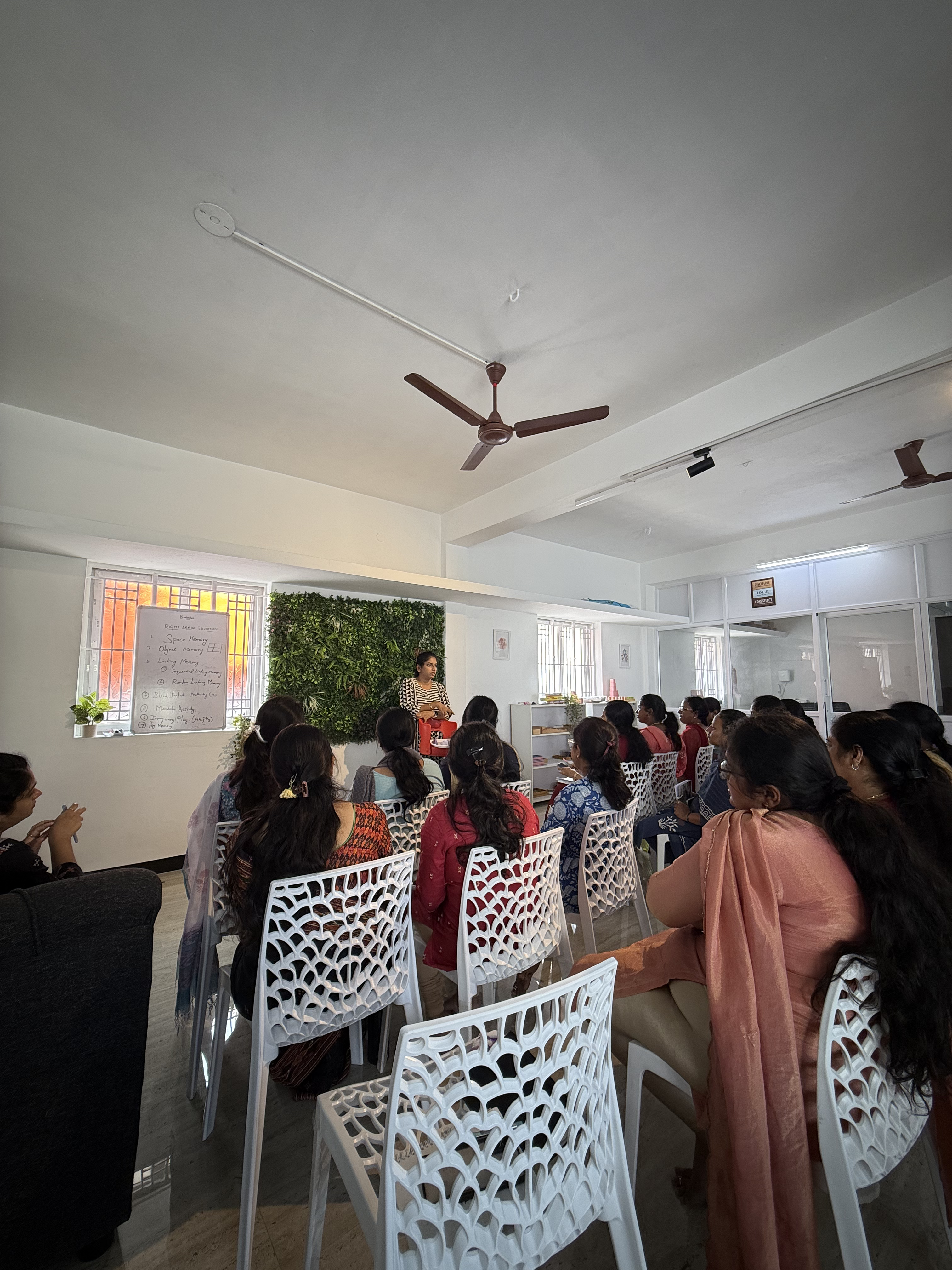
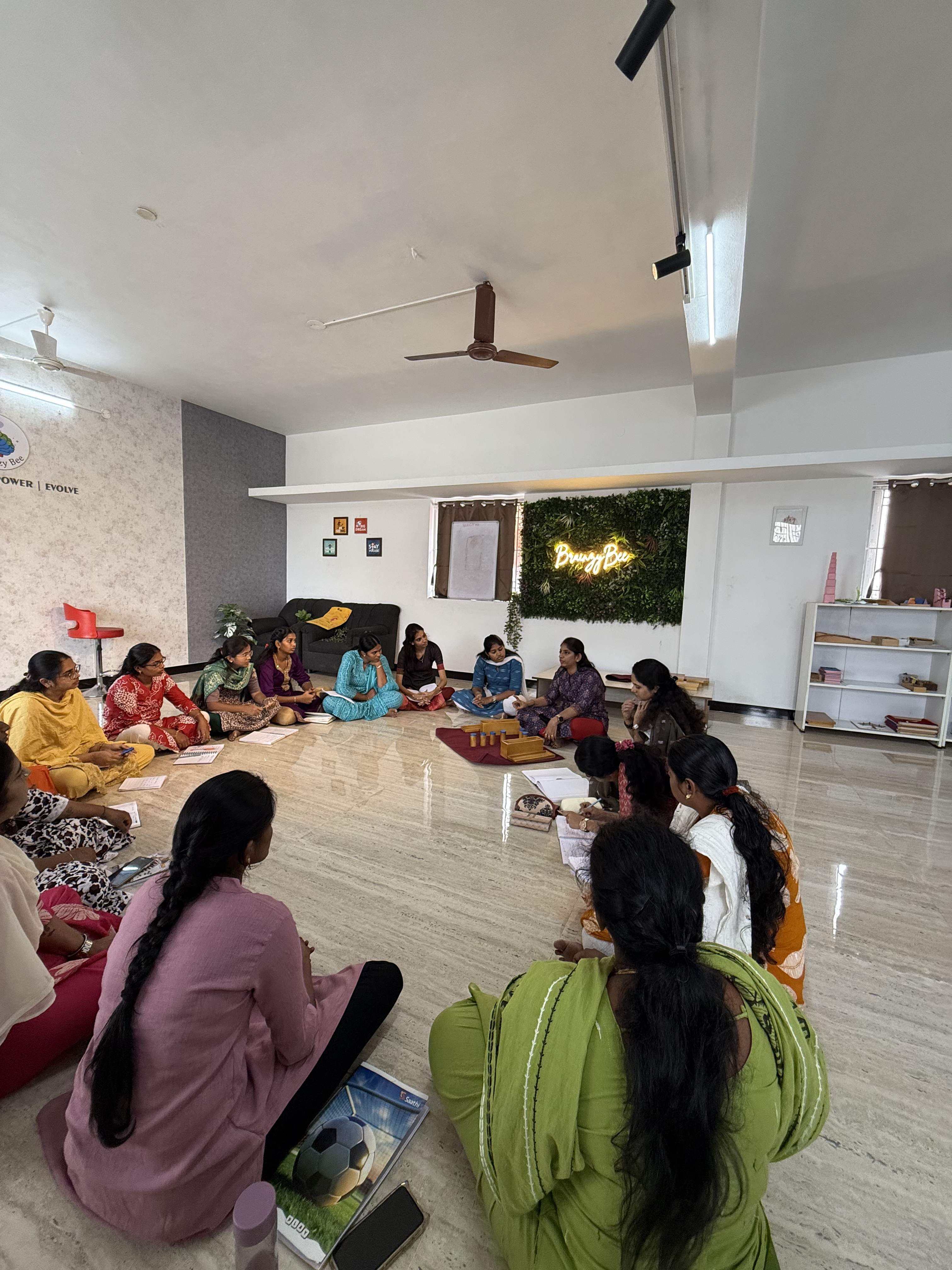
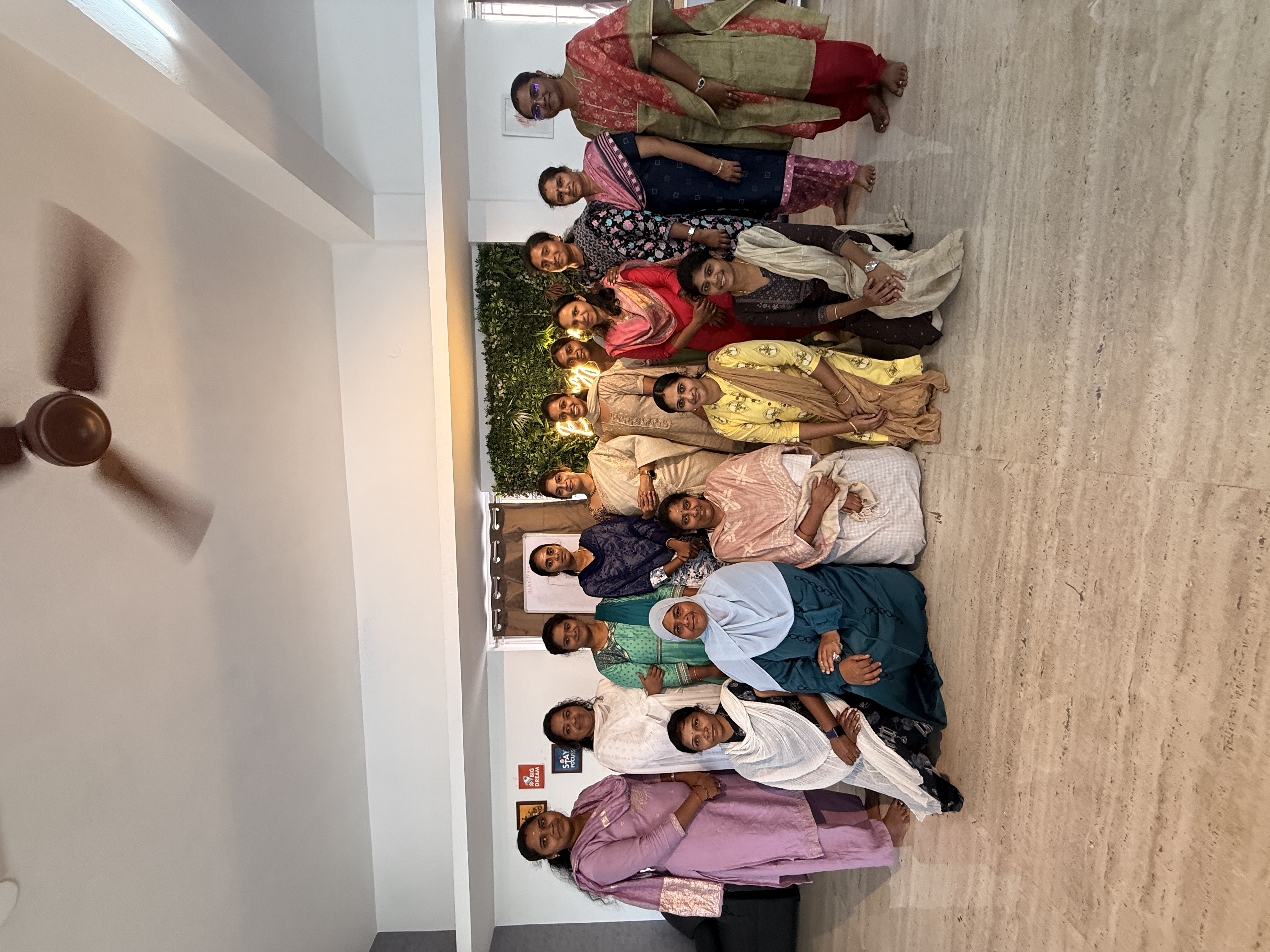
At BrainzyBee, we train teachers to observe objectively and professionally.



.png)
.png)
.jpeg)
.jpg)
.jpg)



.png)



.png)
.jpg)