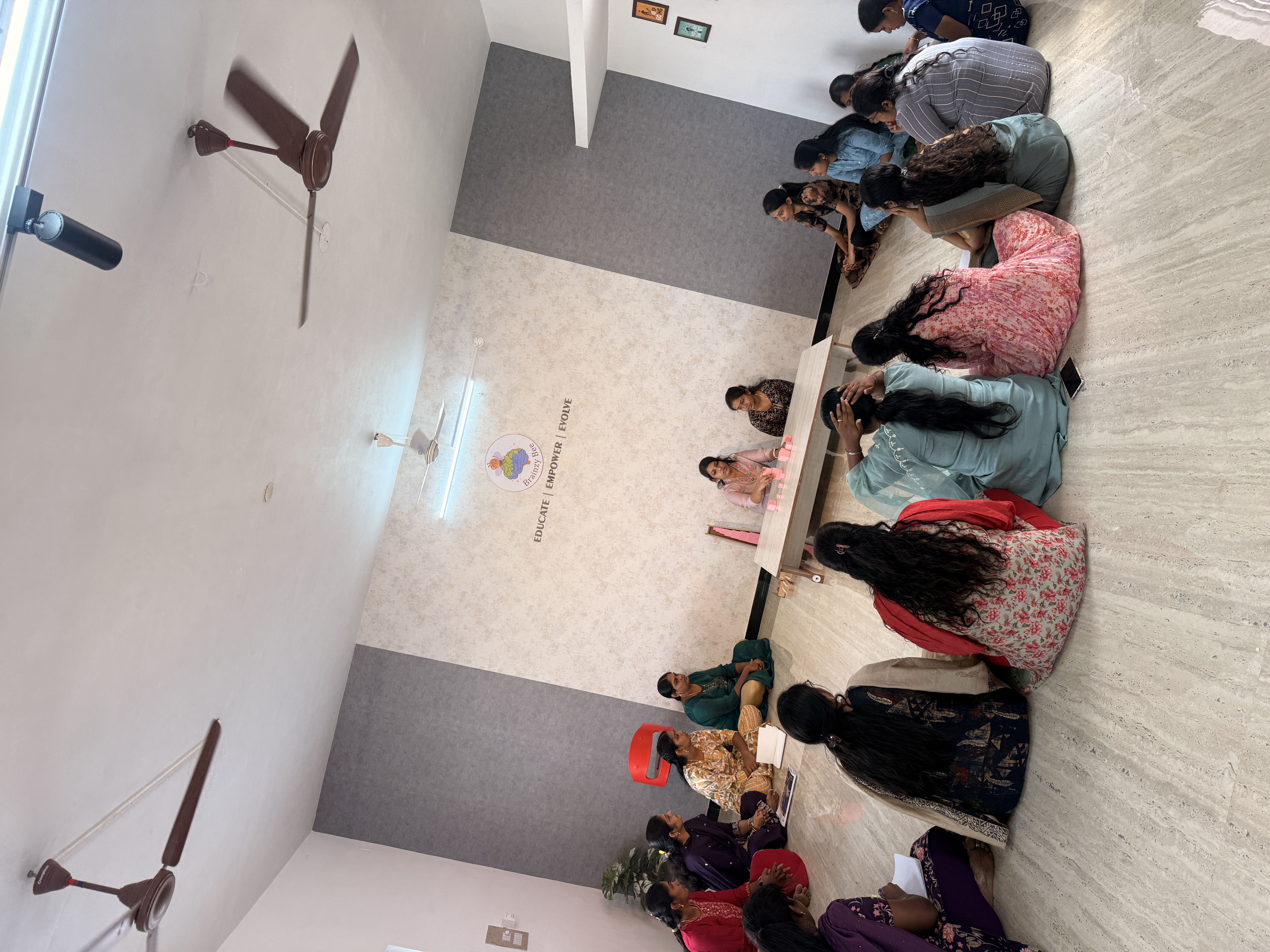
Guiding Montessori Teachers Through Observation: The Heart of Montessori Education
Observation is one of the most important tools in Montessori education. Dr. Maria Montessori emphasized that careful observation allows teachers to truly understand each child’s unique development, interests, strengths, and needs. Rather than directing every aspect of learning, Montessori teachers observe thoughtfully and use what they learn to guide children toward meaningful growth.
Why Observation Matters in Montessori
In a Montessori classroom, observation helps teachers:
Understand each child’s developmental stage.
Identify interests and learning preferences.
Recognize when a child is ready for new challenges.
Support independence and self-directed learning.
Create an environment that meets the needs of every learner.
Through observation, teachers gain valuable insights that cannot be obtained through testing alone. They learn how children interact with materials, solve problems, communicate with peers, and develop confidence.
The Role of the Montessori Teacher
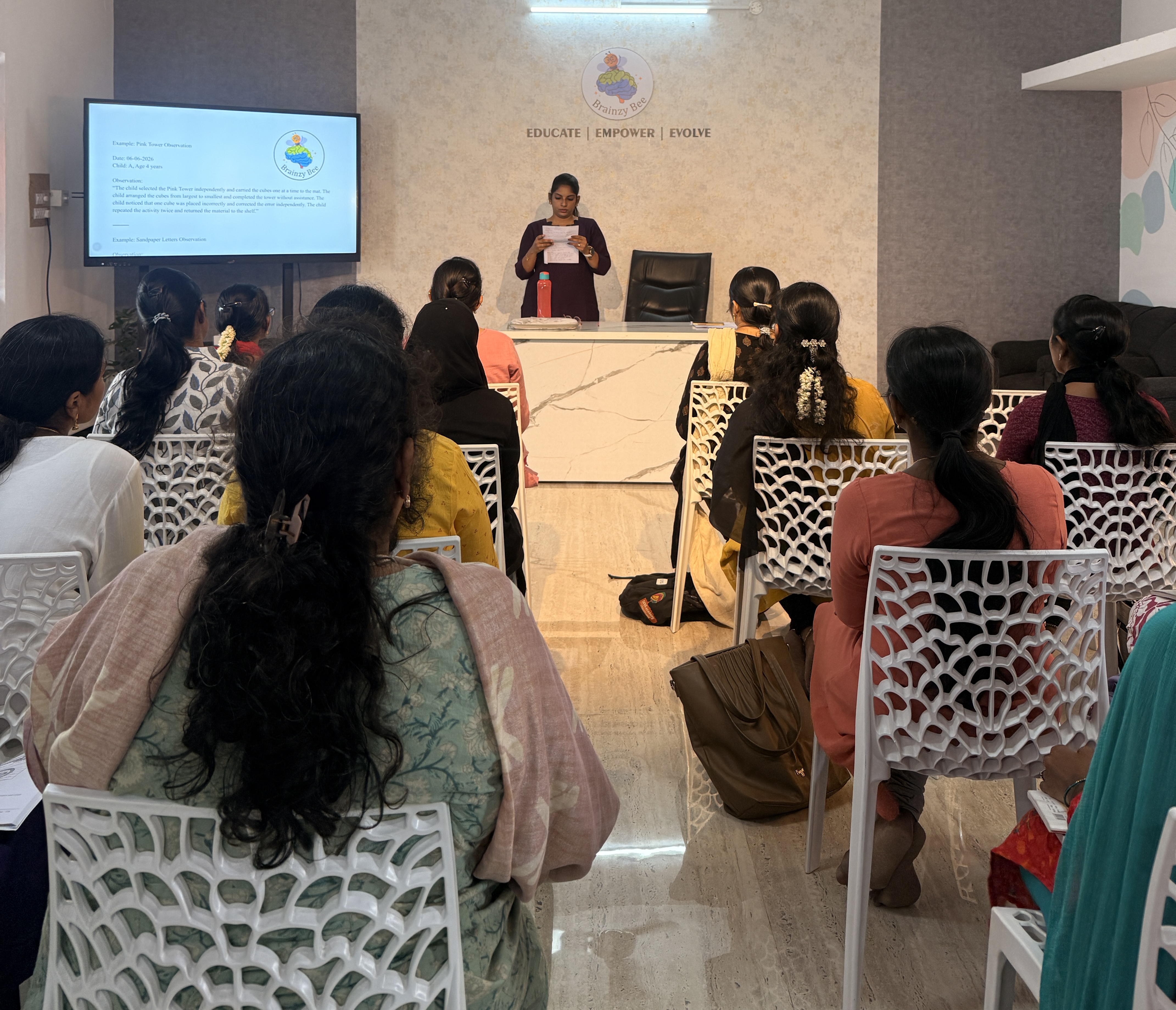
A Montessori teacher is often described as a guide rather than a traditional instructor. Observation enables the teacher to step back, watch carefully, and determine the best way to support each child. Instead of interrupting learning, the teacher observes patterns, records progress, and introduces lessons at the right moment.
Effective observation helps teachers:
Prepare an engaging learning environment.
Respect each child’s pace of development.
Encourage concentration and independence.
Foster social and emotional growth.
Build strong relationships with children and families.
What Teachers Observe
Montessori teachers observe many aspects of a child’s development, including:
Concentration and attention span
Choice of activities
Fine and gross motor skills
Social interactions
Problem-solving abilities
Language development
Emotional well-being
These observations help teachers make informed decisions about lessons, classroom arrangements, and individualized support.
Observation Leads to Meaningful Learning
When teachers observe carefully, they can provide learning experiences that truly meet the needs of each child. Observation allows educators to recognize sensitive periods, celebrate achievements, and offer guidance when necessary. This personalized approach helps children develop confidence, independence, and a lifelong love of learning.
Conclusion
Observation is at the heart of Montessori education. It empowers teachers to understand children deeply and respond thoughtfully to their developmental needs. By observing with patience, respect, and intention, Montessori teachers create an environment where every child can thrive and reach their full potential.







.png)



.png)
.jpeg)
.jpg)

.jpg)







.png)







.png)
.jpg)